
Over the years, I have been interviewed by countless magazines, newspapers, and other media outlets, but the one article that has garnered the most response and feedback by far is an interview I did with Vice in late 2016 on the subject of individuals that have lost their virginity later in life. I have heard from people as far away as Germany and India for whom that article especially resonated. Indeed, the spotlight on communities of individuals who have experienced a crippling lack of sex has recently made headlines with the unfortunate car attack in Toronto by a self-described incel (involuntary celibate).
Going back to the Vice article (which you should definitely check out, it’s excellent), its main thesis is that individuals who missed out on the normal sexual experiences of early adulthood often feel like a tremendous part of their identity or self-esteem is missing, which then propels them to seek to soothe that hole by making up for a prior lack of sexual experiences. In this blog post, I will focus on those individuals who have regrets about missed sexual opportunities, but the same advice will hold true for anyone with any other kind of regrets.
I have often seen individuals who sought out sex workers as a means to catch up on their “numbers” and then opted for a self-diagnosed label of sex addiction when caught by a partner or spouse. Of course, this behavior is not a sign of addiction but rather an attempt to find validation, virility, and self-acceptance through sexual conquests. For this reason, a focus on sex as the main driving factor is often overly simplistic and superficial. For the behavior to no longer have its desired effect, the individual needs to come to terms with intrinsic elements that seem missing.
In my clinical experience, no amount of “making up” behavior will ever undo this gaping hole. It is never enough. And so the individual always needs to up the ante, raise the stakes to try to fill the emptiness. What we must do is stop this never-ending cycle, and learn to bury the past instead of reliving it through failed attempts at undoing. In these situations, I have often found that examining the underlying “schemas” (the complex web of thoughts, beliefs, and emotions) surrounding the behavior can prove fruitful. For example, I inevitably find that my clients that struggle with feelings of sexual regret also hold deep feelings of personal inadequacy and low self-esteem. Early experiences of sexual rejection have often become internalized as markers of inferiority. As we dig deeper, it becomes evident that the sex is only the tip of the iceberg; the regret of missing out on sex and the subsequent pursuit of it turns out to mask a more dogged pursuit for an integrated sense of wholeness.
To start, I ask my clients struggling with these issues to identify what I call “pathogenic beliefs” that are negatively influencing them. The word pathogenic means disease-causing, so I am literally referring to beliefs that cause pain, usually in the form of depression or anxiety. For example, I may ask, “When you think of your past sexual regrets, what thoughts come to mind?” Inevitably, something along the lines of “I’m not good enough,” or “No one could ever find me attractive” come to the surface. I want to isolate on those beliefs since these are the pain-causing agents we need to change. Often, when we get a pathogenic idea into our heads, we then reinforce it through a process of confirmation bias, in which we only notice confirming events and minimize or ignore any evidence that may disconfirm the belief. This process plays out in a number of other ways– for example, studies show that those who identify as liberal only pay attention to news with a liberal slant, while those who are conservative only follow conservative-leaning news.
Going back to our discussion of sexual regret, however, what we want to do in order to challenge our beliefs is to seek out disconfirming evidence. One example is to look at current or former relationships. Folks who are struggling with sexual regrets are sometimes currently in an existing relationship. If the individual believes that no one could ever be attracted to them, I ask, “Well, what about your partner? Do you think he/she is not attracted to you?” Often they answer, “Yes, but he/she is required to, they are married to me.” This is a perfect example of a cognitive distortion, in that the individual cannot see that they are attractive to at least one other person. I may say something like, “Your partner is not your mother, and so is not required to love you, so why do you think they got together with you in the first place?” What I’m simply trying to do here is to plant the seeds of doubt into my client’s faulty narrative.
I will then help them to identify other points of disconfirming evidence. Remember, much of trying to undo sexual regrets involves efforts at securing a sense of validation that was missing in the past. A faulty belief such as “I’m just not good enough” may accompany these behaviors. So, I will help my client identify other areas of their life that disconfirm this prevailing narrative. For example, they may have received an honor or promotion at work, lost 30lbs as part of a disciplined approach to their fitness and nutrition, or found a way to overcome a family crisis. Invariably when I point these out, I am met with some resistance. They may be so used to devaluing themselves that they don’t even allow themselves the opportunity to soak in and acknowledge their successes.
In addition to noticing disconfirming evidence around them, I also encourage my clients to actively create their own moments of disconfirming evidence, not just passively wait for them to occur. For example, we may set up some small challenges that they can surmount as experiential proof. I’ll wrap it up here, as my main point is that a) sexual regrets are very common, b) acting to undo or make up for those regrets is equally as common, and c) getting off the hamster wheel of regret-behavior-ongoing regret requires a deeper dive into the underlying beliefs that continue to reinforce the behaviors and regrets. Inevitably, what my clients begin to realize is that regret over lost sexual opportunities often has nothing to do with the sex itself, and the answers they have been seeking have been inside of them all along.
























































































 Prevention: Is Sex Addiction Real?
 Romper: Emotional Infidelity
 Fatherly: BDSM More Common Than You Think
 E! Online: Marrying a Murderer
 Who Magazine: What is Bisexuality?
 CNN: Why Men May Exaggerate Their Sex Numbers
 Women’s Health: 10 Kinky Sex Ideas
 NY Post: How Tattoos Can Sabotage Your Love Life
 Allure: 8 BDSM Sex Tips to Try If You’re a Total Beginner
 Great article in Prevention Magazine about the sex addiction controversy. Check out what I had to say.
 Romper approached me again for another quote, this time about emotional infidelity.
 Interesting piece in Fatherly about BDSM in which I was interviewed.
https://www.fatherly.com/love-money/bdsm-kinky-sex-not-uncommon/
Interesting piece in Fatherly about BDSM in which I was interviewed.
https://www.fatherly.com/love-money/bdsm-kinky-sex-not-uncommon/ E! News picked up my an interview I did with Vice a few years ago about hybristophilia, which is the attraction to criminals. Very interesting story.
 Who is Australia's version of People Magazine. They wanted to know what bisexuality is and I provided some insight.
 Seems like something doesn't add up on sex surveys-- are men exaggerating their number of partners? Check out what I tell CNN.
 Women's Health asked me for some kinky ideas to spice up one's sex life.
 I was interviewed by the NY Post about all the ways in which I've seen bad tattoos sabotage relationships.
 Allure Magazine asked me about tips for BDSM beginners.
 I answer questions from Salon.com about the infamous porn site PornHub.
 I tell Cosmo about the personality traits of monogamous individuals.
 I explain to Refinery29 why it's so important to not fake orgasms in a relationship.
 I am interviewed in this fairly nuanced piece on the pros and cons of porn.
 I am interviewed by Headspace, one of the best meditation and mindfulness apps available, on how to become more present.
https://www.headspace.com/blog/2017/05/26/enjoy-sex-more/
I am interviewed by Headspace, one of the best meditation and mindfulness apps available, on how to become more present.
https://www.headspace.com/blog/2017/05/26/enjoy-sex-more/ I am interviewed in this intriguing Business Insider article on how often happy couples have sex.
 The Huffington Post in South Africa profiles my work around challenging sex addiction (including my red/yellow/green menu exercise) .
 I go deep into the sex toy business with Vice.
 I give some insight into this interesting topic.
https://thetab.com/us/2017/03/22/happens-boyfriend-leaves-another-man-63306
I give some insight into this interesting topic.
https://thetab.com/us/2017/03/22/happens-boyfriend-leaves-another-man-63306 I am featured in this outstanding article in UK's Independent on women and virtual reality porn. I thought this was a fairly sharp and nuanced piece.
 I give Redbook some pointers on having a 3some for the first time.

 Playboy sent a journalist to watch Fifty Shades Darker, and then compared the movie with the results from my recent groundbreaking research on BDSM. Great article, enjoy!
 I am featured in this terrific New York Magazine article, discussing some of the finer points brought up in the earlier article in SELF magazine (see listing below).
 I am featured in this terrific article in SELF magazine on the nuances of the sex addiction debate.
 Complex asked me to weigh in on this provocative topic.
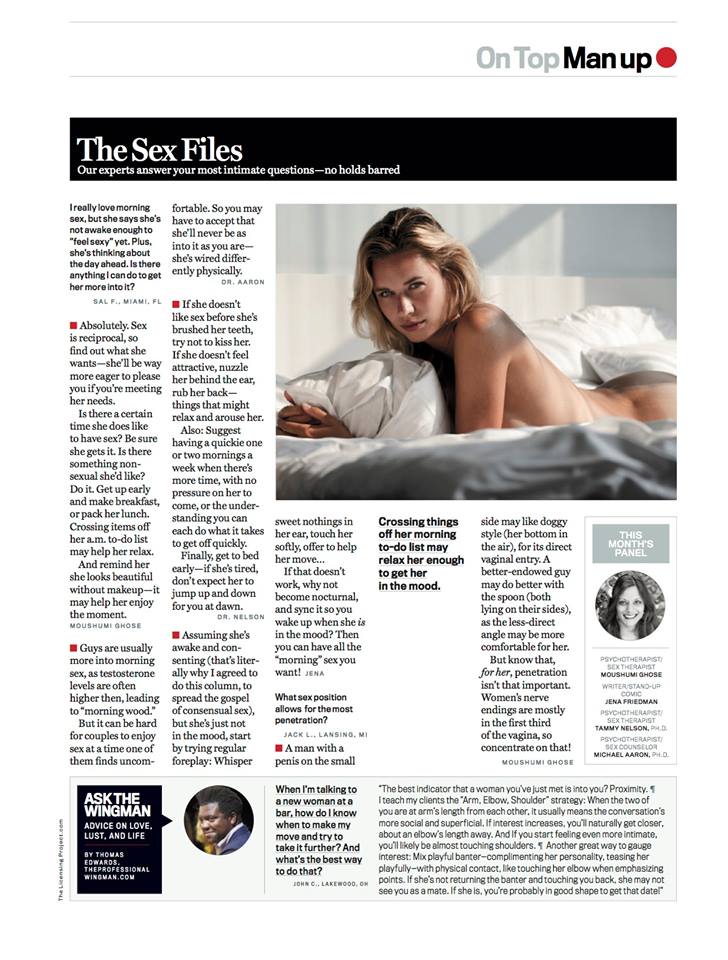
 I weigh in in this great advice column in Thrillist by Elle Stanger.
 Great episode, check it out.
https://soundcloud.com/futureofsex/04-exploring-sexual-fluidity-bicuriousity-for-women-featuring-skirt-club-and-dr-michael-aaron
Great episode, check it out.
https://soundcloud.com/futureofsex/04-exploring-sexual-fluidity-bicuriousity-for-women-featuring-skirt-club-and-dr-michael-aaron I give couples advice on how to deal with differences in preferred sleeping arrangements.
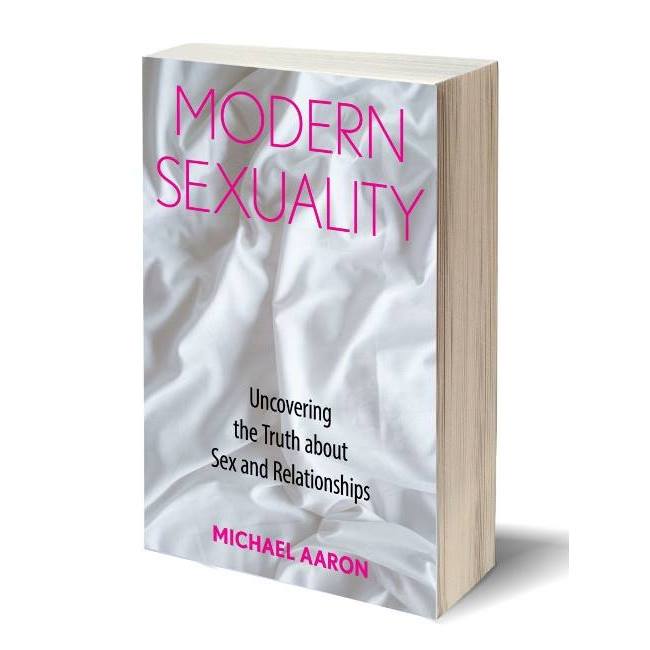
 Alternet does a great job of reviewing my book. Check out the link below.
 In this episode, we talk about the societal myths of sexuality, including:
 I was asked to appear on Australian radio. It was a very fun segment, will post the link when I have it!
 I appear on the Stereo-Typed podcast to discuss my new book, fantasies, and our shadow self. Click the audio player below and enjoy!
https://www.spreaker.com/user/crazyheart/stereo-typed-8-dancing-with-your-shadow
I appear on the Stereo-Typed podcast to discuss my new book, fantasies, and our shadow self. Click the audio player below and enjoy!
https://www.spreaker.com/user/crazyheart/stereo-typed-8-dancing-with-your-shadow I appear on the Boom Doctors Podcast to discuss my new book Modern Sexuality and my work as a sex therapist. Clink the link below to listen in.
http://theboomdoctors.com/2016/09/21/ep-132-michael-aaron-on-his-work-as-a-sex-therapist-his-new-book-modern-sexuality/
I appear on the Boom Doctors Podcast to discuss my new book Modern Sexuality and my work as a sex therapist. Clink the link below to listen in.
http://theboomdoctors.com/2016/09/21/ep-132-michael-aaron-on-his-work-as-a-sex-therapist-his-new-book-modern-sexuality/ I was asked by Nylon Magazine to weigh in on the subject of porn and what it means about the individual consumer. Pretty good non-pathologizing piece, check it out here:
 I was interviewed by Vocativ about a new virtual reality series entitled "Virtual Sexology," designed to provide breathing and relaxation exercises in a virtual reality format to help individuals improve sexual functioning. Will something like this prove effective? The jury is out, but check out what I had to say...
 I appeared on the nationally broadcasted Fusion Network Hotline show to discuss the GOP platform of porn as a "public health crisis." As part of the discussion I debate Dr. Neil Malamuth on porn and sexual violence. I thought this was a very thorough and productive half hour, which you can watch below:
 In this Huffington Post article, I advise couples to use sex menus to spice things up. Check out all the details in the link below.

 I appeared on French national tv channel Canal + on the Emission Antoine tv show, discussing the psychology behind financial domination. I will post a video clip of the interview shortly.
 I was interviewed on Huffington Post's Love + Sex Podcast, which I'm told is the most downloaded sex and relationship podcast on iTunes. In this episode, I dispel the wild myths about "sex roulette" parties.
 I was interviewed for an upcoming online sexuality discussion series, the Sexual Reawakening Summit. It features many top sex therapists from around the country and you can access it by using this link:
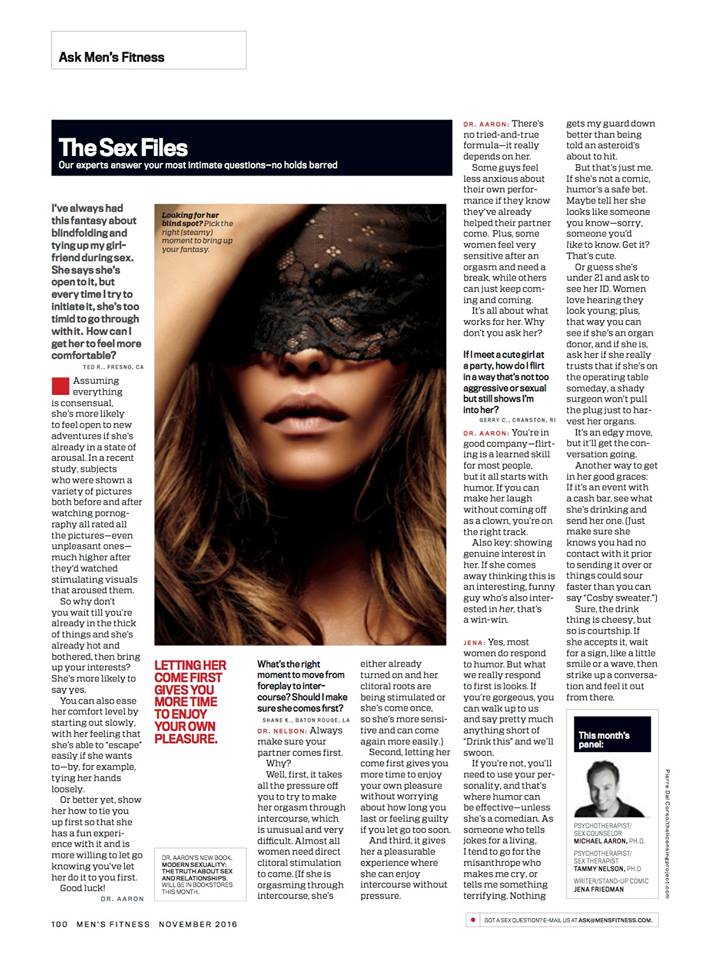
 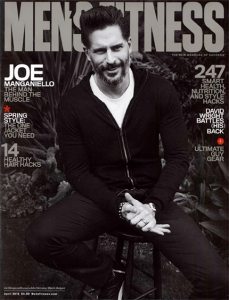 In the April edition of my Men's Fitness 'Sex Files' Q&A column, I answer questions about anal sex and porn. Hurry and pick up a copy before it's off the stands!
 I was asked by Women's Health Magazine to provide some advise on how to incorporate some new positions to spice up one's sex life. With a bunch of pictures and diagrams, I'm sure you'll find something that will intrigue you.
 Looks like Yahoo News picked up the Reuters article on women's fears that their partners expect sexual perfectionism. Check it out.
 My latest interview with Reuters, this time about social pressure on women to be perfect sexually. "Our society is filled with sexual myths and misconceptions, mostly stemming from a combination of our culture's puritanical roots, as well as rampant consumerism, which feeds off individual insecurities to sell unnecessary products," Aaron said.
 Want to know more about what the AltSex NYC Conference is all about? I appear with my co-organizer, Dulcinea Pitagora, on the Sex with Timaree show, a popular podcast, to discuss numerous things including how the conference was created and what attendees can expect. Click on the link below to check it out:
https://sexwithtimareepodcast.wordpress.com/2016/02/29/ep236-the-upcoming-alt-sex-nyc-conference-sex-with-timaree-altsexnyc-2/
Want to know more about what the AltSex NYC Conference is all about? I appear with my co-organizer, Dulcinea Pitagora, on the Sex with Timaree show, a popular podcast, to discuss numerous things including how the conference was created and what attendees can expect. Click on the link below to check it out:
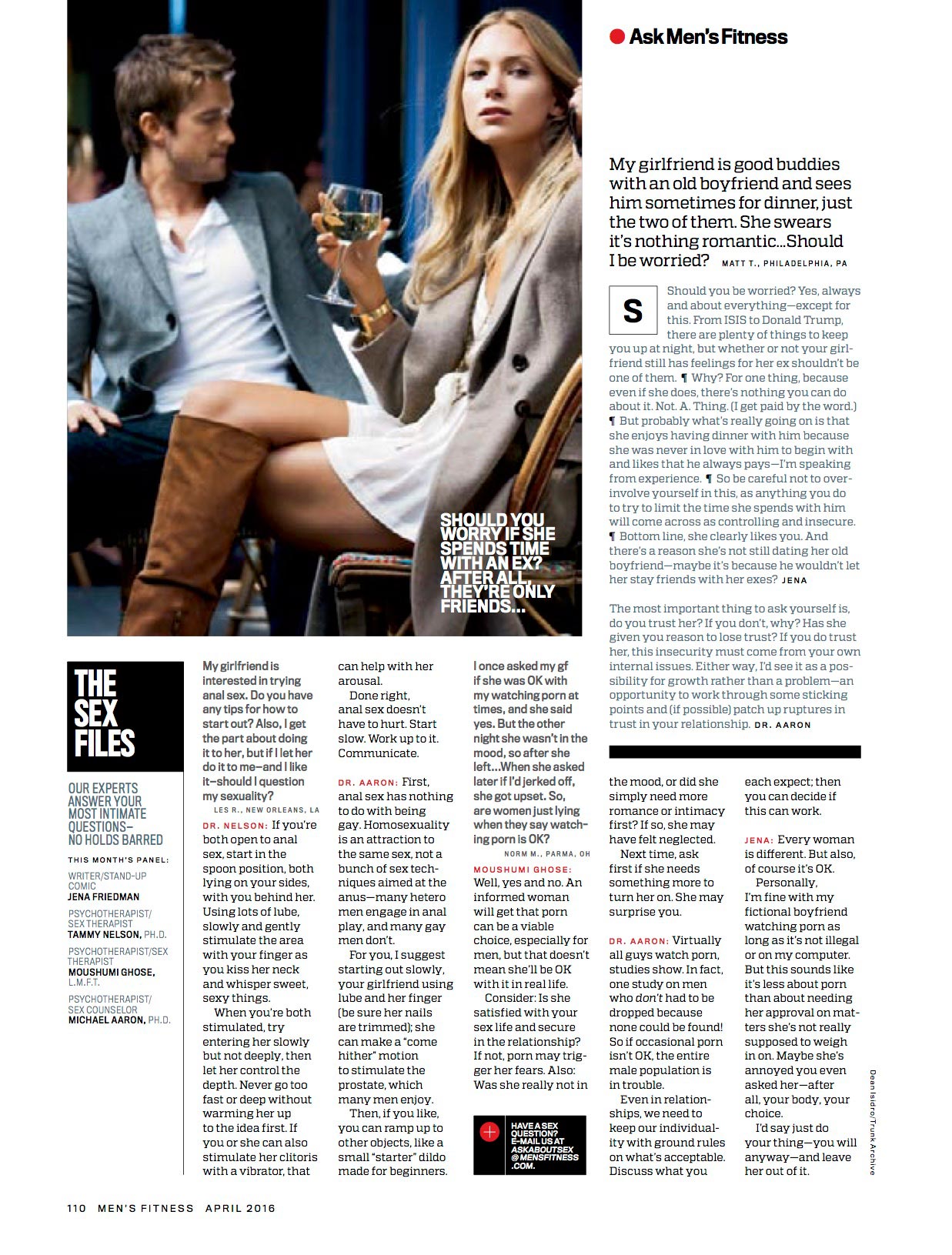
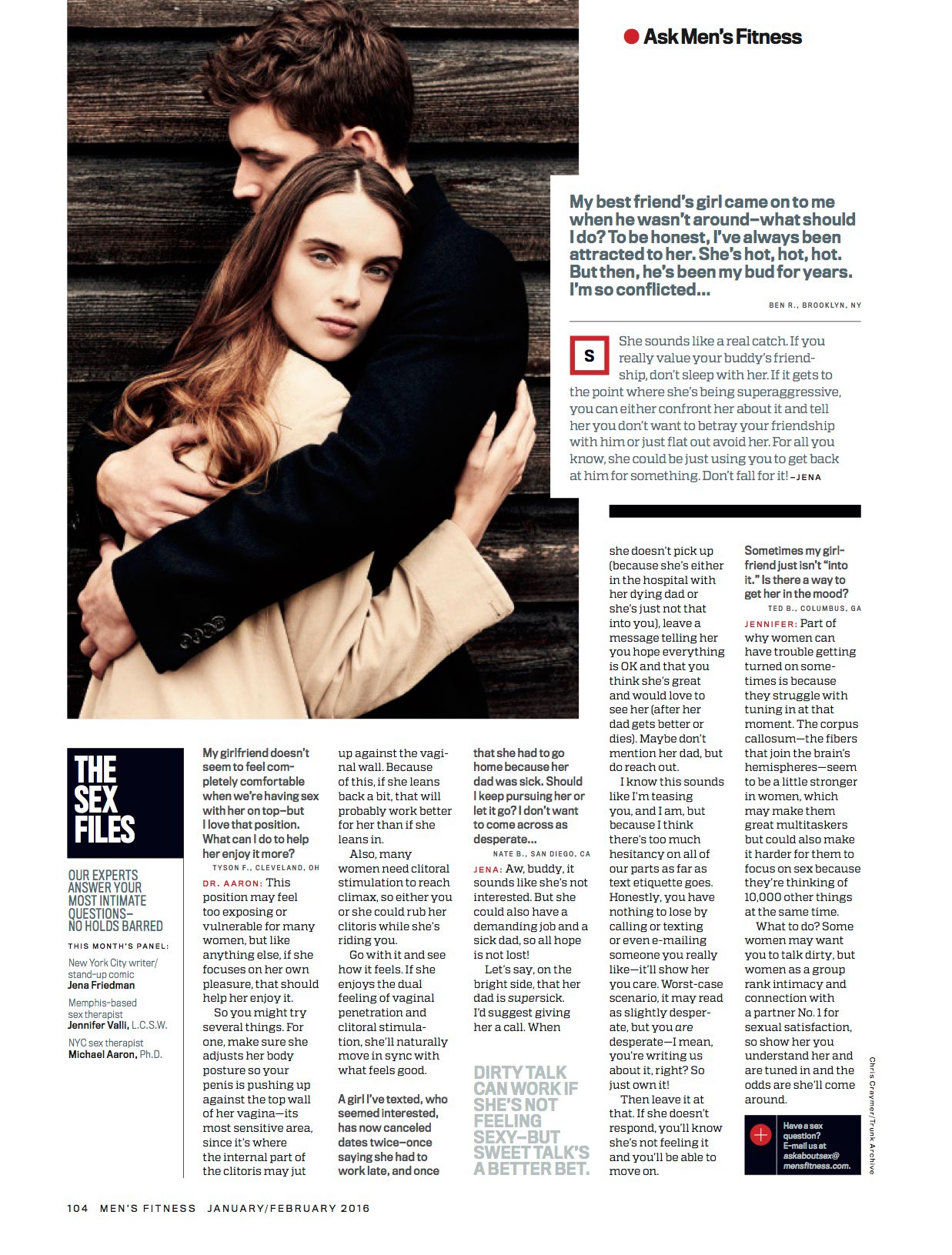
https://sexwithtimareepodcast.wordpress.com/2016/02/29/ep236-the-upcoming-alt-sex-nyc-conference-sex-with-timaree-altsexnyc-2/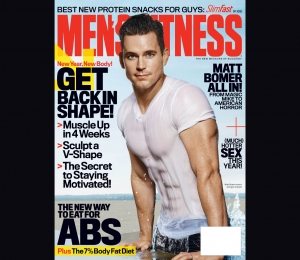 Head out to the newsstands and grab a copy of the Jan 2016 issue of Men's Fitness Magazine to see the premier of the new monthly "Sex Files" column in which I answer readers' sex questions. In this month's issue I answer a question in which a guy is looking to help his girlfriend enjoy more pleasure when she is having sex on top. Check out the screenshot below to see my response:
 Love& is a new magazine about relationships and sex. They interviewed me about common things that women may want their guys to improve upon in the bedroom. One of the big ones is touch, as a lot of men are way too rough and don't know how to adjust their touch to what their partner wants. For more on this, and other pointers, check out the article itself below:
 Market analysts predict that new virtual reality technology will revolutionize the way we experience media, and will specifically boost the porn industry to unprecedented levels. This detailed article covers a lot of ground, addressing both the technology, business and social ramifications of virtual reality porn. I was asked to give my take on the issue and somehow a 20 minute phone conversation was distilled to a brief paragraph at the end of the piece, but nonetheless, it is still a worthwhile read.
 Does Bill Cosby have a fetish for unconscious women? Who knows? He's not a client and I've never met him, so I cannot say for sure, but this provocative piece in the NY Times tries to get to the bottom of his alleged bizarre behavior. The reporter did a great job dealing with some uncomfortable material, so be sure to click the link below to see what I had to say on this issue:
 I was recently asked by a reporter from Men's Fitness magazine to discuss reasons why a heterosexual man might refrain from having sex with a willing woman. The questions were basically soft balls, seemingly aimed at a younger, more inexperienced, male audience, but hey, I managed to drop a few decent pointers, relating to finding out if the woman is in a relationship, and if so, what kind of relationship she is in before diving in. If you want to take a look and poke around more, you can go directly to the article below. You are going to have to click to page 3 to see my quotes, btw.
 I was recently interviewed for a Men's Health article on sex toys designed for men. They wanted to know my take on these "robotic masturbators" (as they called them) and as always, I tried to take a fair and balanced view of things. I pointed out that they could be used as a way to get better acquainted with one's sexuality (as well as get some much needed relief), but an over-reliance on technology may also limit guys from developing the necessary skills that would help them form romantic relationships.
At any rate, hurry on over to the article here--
I was recently interviewed for a Men's Health article on sex toys designed for men. They wanted to know my take on these "robotic masturbators" (as they called them) and as always, I tried to take a fair and balanced view of things. I pointed out that they could be used as a way to get better acquainted with one's sexuality (as well as get some much needed relief), but an over-reliance on technology may also limit guys from developing the necessary skills that would help them form romantic relationships.
At any rate, hurry on over to the article here--  Go check out a great, and I mean GREAT, absolutely fascinating article in the May issue of Upscale Magazine, entitled "Secret Lovers," in which I am interviewed regarding the hush hush world of the swinger subculture. The writer does a really good job of trying to understand the psychology of folks who practice consensual non-monogamy and I think the piece is very even-handed, with some practical tips for couples who are curious about dipping their toes in the lifestyle. I'll leave you with a quote from one of the swingers profiled in the piece, which I think gives a good feel for the tone and depth of the article-- "I love to see her with two guys and two girls at once. I enjoy submissive women, and there is no sexier submission than to watch my wife please me by pleasing others." If that sounds interesting, then I suggest you head out and grab a copy. It's well worth the read.
 I am featured in the Sex Q&A section of Cosmo's April 2014 issue, in which I get asked about BJs, Plan B, sex in hot tubs, and all kinds of other tittilating reader questions. They did a good job of adding all kinds of humor, including a silly picture of tea bags-- need I say more? It's a can't- miss hoot. Go and check it out at news stands now!
 I just recently did an interview for a cool podcast called

































































Thanks for this blog. While reading it, I gained some very helpful and new insights.
I’m not all that different from your hypothetical client but I can tell you that your approach would not work with me if I were your client. I could say a lot more but I’ll try to keep this short.
The problem is when you get to this part: Inevitably, something along the lines of “I’m not good enough,” or “No one could ever find me attractive” come to the surface.
“I’m not good enough” and the like aren’t my faulty beliefs because they aren’t MY beliefs: they’re gross over-simplifications of more reasonable statements. My real beliefs, if I had enough time to sit down and write it all out would be more like: I’m not good enough … to, in my past and up to very recently, convince a woman I’m attracted to, who is also attracted to me, who lives within a certain geographical distance, in a certain age range, and satisfies other criteria … I’m not good enough to convince such a woman to engage in a sexual relationship with me, or engage in certain sexual behaviors, or rather, I’m not good enough to convince such a woman, with a high enough probability, to engage with me in that way for me to be able to actually have enough of the experiences I want to have… something like that.
I could spend hours properly qualifying my statement and you could probably still find some small issue to argue about. In general, people don’t talk in perfectly defendable sentences; statements like “I’m not good enough” aren’t meant to be taken literally and you have to look at the context. When it’s a response to a question about sexual regrets it probably doesn’t also mean not good enough to excel at work, becoming more physically fit, or solving a family crisis.
You get resistance because you attack them for saying something they didn’t intend to say. It isn’t that you’re wrong, or that the evidence you cite isn’t accurate. If I were your client you’d fail to convince me to change my views because your evidence isn’t disconfirming, it is irrelevant.
One final example to drive the point home: you might try to disconfirm the view that “no one could ever be attracted to me.” I, and I think most people, wouldn’t mean that literally if I were to say that. I would mean it in the sense similar to a situation where, for example, if a friend were to ask me if I thought it would be a good idea to spend a significant amount of money on lottery tickets, I’d advise them not to because they’d “never win.”
“What about all of the lottery winners we hear about in the news?” my hypothetical friend might ask, trying to point out disconfirming evidence.
@Matt: Your argument is irrelevant to the heart of the matter being discussed. You’re also conflating hyperbole with detailed rationalizations for not letting go of certain beliefs. You have to first, willingly let go of self defeating beliefs which preclude the germination of any therapeutic interventions. Otherwise, you’re right! If you’re determined to believe you’re not good enough, on the basis of any exhaustive laundry list of excuses, you’ll be seeking confirmation bias to support those beliefs about self, every where you look…..