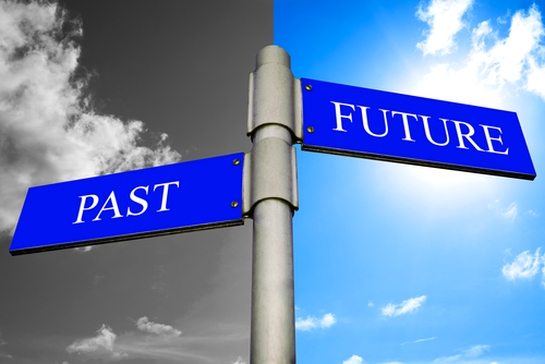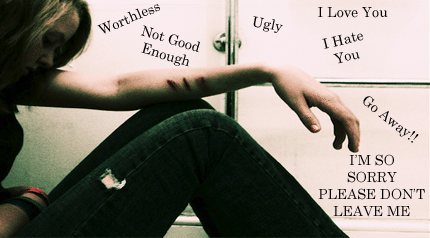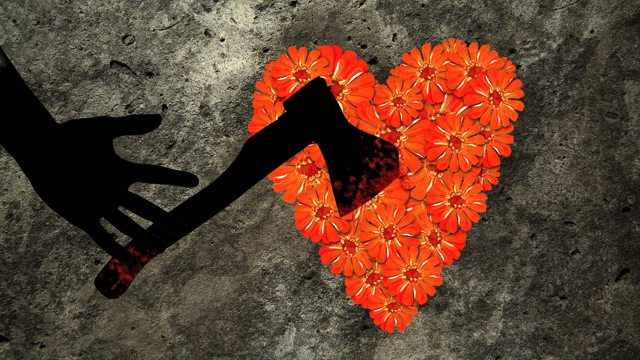
As we enter the holiday season, I experience an unmistakable pattern in my practice that usually becomes most prominent at this time of year when people start taking stock of the year and (on a larger scale) of their entire life. One of the most corrosive thought patterns and emotions that people fall into is remorse and regret about lost opportunities or poor decisions from the past. These feelings may have something to do with sex or not, but the common theme is one of loss, particularly the loss of youth. I mention youth because we are most likely to feel regretful when we feel we don’t have a second chance or do-over, and second chances are abundant in youth. Therefore, remorse and regret are often as much to do with the mourning of youth as it is with the concrete details of missed opportunities.
Everyone has regrets at times, but it becomes problematic when they become obsessive, devolving into unhelpful rumination, bitterness, possibly vindictiveness, and at worst, destructive “acting out” behaviors. In some ways, and counterintuitively, bitterness and disappointment can sometimes feel “addictive” in the sense that they can provide a sense of pleasure and power from being a martyr or victim. Yes, victimhood can be and sometimes is used as currency. (Note, I am not invalidating victimization, but simply stating that dwelling on such can provide secondary benefits for some people). And cultivating anger feels both more defensive and empowering than truly facing sadness and vulnerability.
When faced with such “existential challenges,” I find it helpful to envision the dual control model that I have discussed in previous articles. Briefly, the dual control model (of sexuality) posits that our behavior is motivated by both positive (seeking pleasure) and negative (avoiding pain) forces. We cannot truly overcome our anxiety or ambivalence about a situation simply by decreasing the negative (fear, worry), but we need to also make contact with the positive (what it is that we expect to find pleasurable about the experience). The dual control model, as far as I know, was developed as a way of conceptualizing sexual arousal, but I find it applicable on a more, global scale to explain most other aspects of human behavior as well.
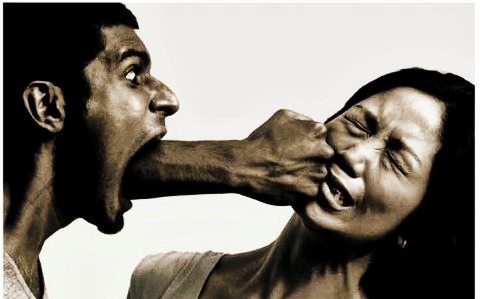
Using this lens, extended rumination about remorse and regret obviously falls into the negative column. But most importantly, and the main thesis of this article, we cannot get out of the negative state simply by trying to minimize it. We need to make contact with the positive in order to balance things out. More specifically, we may try to reason our way out of remorse or regret, but that won’t actually do much aside from perhaps reducing its intensity. Most likely, though as research indicates, focusing too much on one emotion only exacerbates it further. For example, the field of psychology once believed that therapies such as primal scream or punching a dummy or something like that would help to “get the anger out,” but now we know that amplifying anger only makes us more, rather than less, angry. Same thing with other emotions, such as regret. The more we think about regretful things, the more regretful we become.
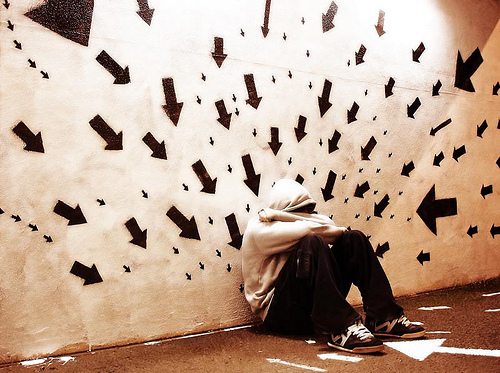
Instead, we need to counter the regret with its antithesis– namely gratitude. When we are stuck in regret, I compare it to a horse with blinders, only seeing a narrow slice of reality. In this state, everything may tend to seem more gray and bleak, and then we may spiral further downward through the process of confirmation bias, in which we only notice other bleak things that confirm our worldview. In this way, normal sadness and regret may slide into deeper depression. If we struggle to reason our way out of the funk, we are still only working with the reality that we see through our blinders, and indeed, we only tighten the blinders to our face. However, by making contact with gratitude, we immediately open up or vision to a fuller 180 degree panorama, allowing ourselves to see a more comprehensive, balanced view of the situation.
To start out, we need to be able to identify things we have to feel grateful about. It’s fairly simple in theory, but often people may find it harder to do in practice. This is because, as humans, we are fairly adaptable and easily come to expect and take for granted the things we do have. But in reality we are entitled to nothing in life; everything we have is a blessing. The shelter over our head, the food we eat, the clothes on our back. If those things feel too difficult to feel grateful about, I have audio tapes that I provide my clients that help them to cultivate a deeper internal sense of gratitude through meditation and guided visualizations, etc.
When it comes down to it, we can never guarantee that we can avoid regret. We are always making decisions based on limited information. And the “rightness” of the decision often bears little correlation to its outcome. For example, a decision that seems correct based on the limited information provided may turn out wrong. We may make a wrong decision that turns out great. We may make a decision that seems great in the short term, but proves disastrous in the long-term. Or we make a decision that initially seems disastrous, but opens up doors we never even imagined in the long-run. Life is unpredictable and we can’t control it. We can only do our best. But what we can control, and what we should all try to cultivate, is to practice a daily routine of mindful gratitude. It’s the little sense of joy we can carry with us and no one can take away, and equally important, it is independent from any outside influence or events. It’s the mental health equivalent of eating an apple a day and there’s no better time to start practicing than right now, over the holidays.














































































 Prevention: Is Sex Addiction Real?
 Romper: Emotional Infidelity
 Fatherly: BDSM More Common Than You Think
 E! Online: Marrying a Murderer
 Who Magazine: What is Bisexuality?
 CNN: Why Men May Exaggerate Their Sex Numbers
 Women’s Health: 10 Kinky Sex Ideas
 NY Post: How Tattoos Can Sabotage Your Love Life
 Allure: 8 BDSM Sex Tips to Try If You’re a Total Beginner
 Great article in Prevention Magazine about the sex addiction controversy. Check out what I had to say.
 Romper approached me again for another quote, this time about emotional infidelity.
 Interesting piece in Fatherly about BDSM in which I was interviewed.
https://www.fatherly.com/love-money/bdsm-kinky-sex-not-uncommon/
Interesting piece in Fatherly about BDSM in which I was interviewed.
https://www.fatherly.com/love-money/bdsm-kinky-sex-not-uncommon/ E! News picked up my an interview I did with Vice a few years ago about hybristophilia, which is the attraction to criminals. Very interesting story.
 Who is Australia's version of People Magazine. They wanted to know what bisexuality is and I provided some insight.
 Seems like something doesn't add up on sex surveys-- are men exaggerating their number of partners? Check out what I tell CNN.
 Women's Health asked me for some kinky ideas to spice up one's sex life.
 I was interviewed by the NY Post about all the ways in which I've seen bad tattoos sabotage relationships.
 Allure Magazine asked me about tips for BDSM beginners.
 I answer questions from Salon.com about the infamous porn site PornHub.
 I tell Cosmo about the personality traits of monogamous individuals.
 I explain to Refinery29 why it's so important to not fake orgasms in a relationship.
 I am interviewed in this fairly nuanced piece on the pros and cons of porn.
 I am interviewed by Headspace, one of the best meditation and mindfulness apps available, on how to become more present.
https://www.headspace.com/blog/2017/05/26/enjoy-sex-more/
I am interviewed by Headspace, one of the best meditation and mindfulness apps available, on how to become more present.
https://www.headspace.com/blog/2017/05/26/enjoy-sex-more/ I am interviewed in this intriguing Business Insider article on how often happy couples have sex.
 The Huffington Post in South Africa profiles my work around challenging sex addiction (including my red/yellow/green menu exercise) .
 I go deep into the sex toy business with Vice.
 I give some insight into this interesting topic.
https://thetab.com/us/2017/03/22/happens-boyfriend-leaves-another-man-63306
I give some insight into this interesting topic.
https://thetab.com/us/2017/03/22/happens-boyfriend-leaves-another-man-63306 I am featured in this outstanding article in UK's Independent on women and virtual reality porn. I thought this was a fairly sharp and nuanced piece.
 I give Redbook some pointers on having a 3some for the first time.

 Playboy sent a journalist to watch Fifty Shades Darker, and then compared the movie with the results from my recent groundbreaking research on BDSM. Great article, enjoy!
 I am featured in this terrific New York Magazine article, discussing some of the finer points brought up in the earlier article in SELF magazine (see listing below).
 I am featured in this terrific article in SELF magazine on the nuances of the sex addiction debate.
 Complex asked me to weigh in on this provocative topic.
 I weigh in in this great advice column in Thrillist by Elle Stanger.
 Great episode, check it out.
https://soundcloud.com/futureofsex/04-exploring-sexual-fluidity-bicuriousity-for-women-featuring-skirt-club-and-dr-michael-aaron
Great episode, check it out.
https://soundcloud.com/futureofsex/04-exploring-sexual-fluidity-bicuriousity-for-women-featuring-skirt-club-and-dr-michael-aaron I give couples advice on how to deal with differences in preferred sleeping arrangements.
 Alternet does a great job of reviewing my book. Check out the link below.
 In this episode, we talk about the societal myths of sexuality, including:
 I was asked to appear on Australian radio. It was a very fun segment, will post the link when I have it!
 I appear on the Stereo-Typed podcast to discuss my new book, fantasies, and our shadow self. Click the audio player below and enjoy!
https://www.spreaker.com/user/crazyheart/stereo-typed-8-dancing-with-your-shadow
I appear on the Stereo-Typed podcast to discuss my new book, fantasies, and our shadow self. Click the audio player below and enjoy!
https://www.spreaker.com/user/crazyheart/stereo-typed-8-dancing-with-your-shadow I appear on the Boom Doctors Podcast to discuss my new book Modern Sexuality and my work as a sex therapist. Clink the link below to listen in.
http://theboomdoctors.com/2016/09/21/ep-132-michael-aaron-on-his-work-as-a-sex-therapist-his-new-book-modern-sexuality/
I appear on the Boom Doctors Podcast to discuss my new book Modern Sexuality and my work as a sex therapist. Clink the link below to listen in.
http://theboomdoctors.com/2016/09/21/ep-132-michael-aaron-on-his-work-as-a-sex-therapist-his-new-book-modern-sexuality/ I was asked by Nylon Magazine to weigh in on the subject of porn and what it means about the individual consumer. Pretty good non-pathologizing piece, check it out here:
 I was interviewed by Vocativ about a new virtual reality series entitled "Virtual Sexology," designed to provide breathing and relaxation exercises in a virtual reality format to help individuals improve sexual functioning. Will something like this prove effective? The jury is out, but check out what I had to say...
 I appeared on the nationally broadcasted Fusion Network Hotline show to discuss the GOP platform of porn as a "public health crisis." As part of the discussion I debate Dr. Neil Malamuth on porn and sexual violence. I thought this was a very thorough and productive half hour, which you can watch below:
 In this Huffington Post article, I advise couples to use sex menus to spice things up. Check out all the details in the link below.

 I appeared on French national tv channel Canal + on the Emission Antoine tv show, discussing the psychology behind financial domination. I will post a video clip of the interview shortly.
 I was interviewed on Huffington Post's Love + Sex Podcast, which I'm told is the most downloaded sex and relationship podcast on iTunes. In this episode, I dispel the wild myths about "sex roulette" parties.
 I was interviewed for an upcoming online sexuality discussion series, the Sexual Reawakening Summit. It features many top sex therapists from around the country and you can access it by using this link:
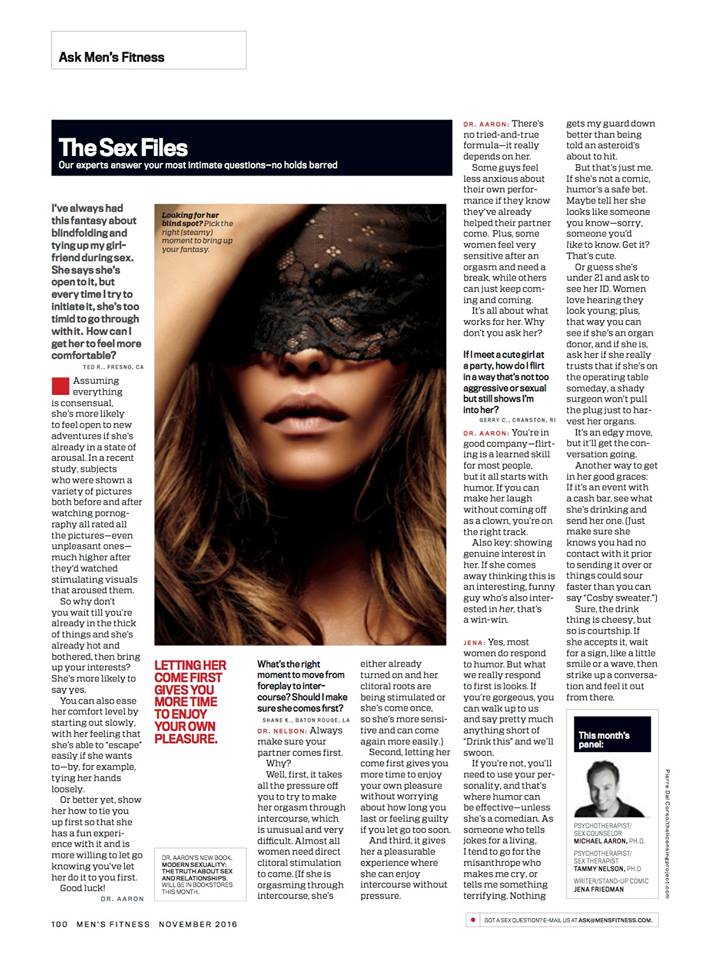
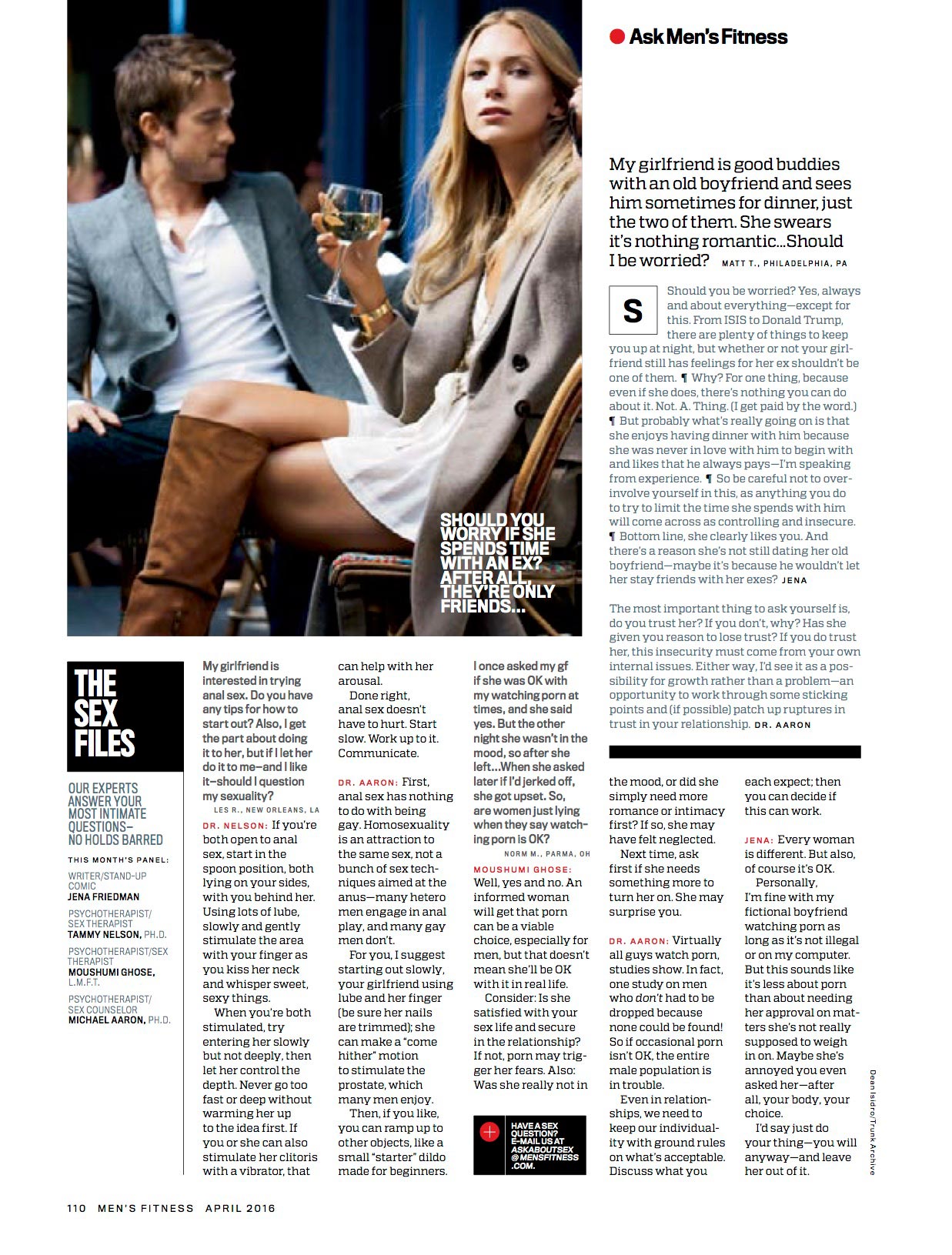
  In the April edition of my Men's Fitness 'Sex Files' Q&A column, I answer questions about anal sex and porn. Hurry and pick up a copy before it's off the stands!
 I was asked by Women's Health Magazine to provide some advise on how to incorporate some new positions to spice up one's sex life. With a bunch of pictures and diagrams, I'm sure you'll find something that will intrigue you.
 Looks like Yahoo News picked up the Reuters article on women's fears that their partners expect sexual perfectionism. Check it out.
 My latest interview with Reuters, this time about social pressure on women to be perfect sexually. "Our society is filled with sexual myths and misconceptions, mostly stemming from a combination of our culture's puritanical roots, as well as rampant consumerism, which feeds off individual insecurities to sell unnecessary products," Aaron said.
 Want to know more about what the AltSex NYC Conference is all about? I appear with my co-organizer, Dulcinea Pitagora, on the Sex with Timaree show, a popular podcast, to discuss numerous things including how the conference was created and what attendees can expect. Click on the link below to check it out:
https://sexwithtimareepodcast.wordpress.com/2016/02/29/ep236-the-upcoming-alt-sex-nyc-conference-sex-with-timaree-altsexnyc-2/
Want to know more about what the AltSex NYC Conference is all about? I appear with my co-organizer, Dulcinea Pitagora, on the Sex with Timaree show, a popular podcast, to discuss numerous things including how the conference was created and what attendees can expect. Click on the link below to check it out:
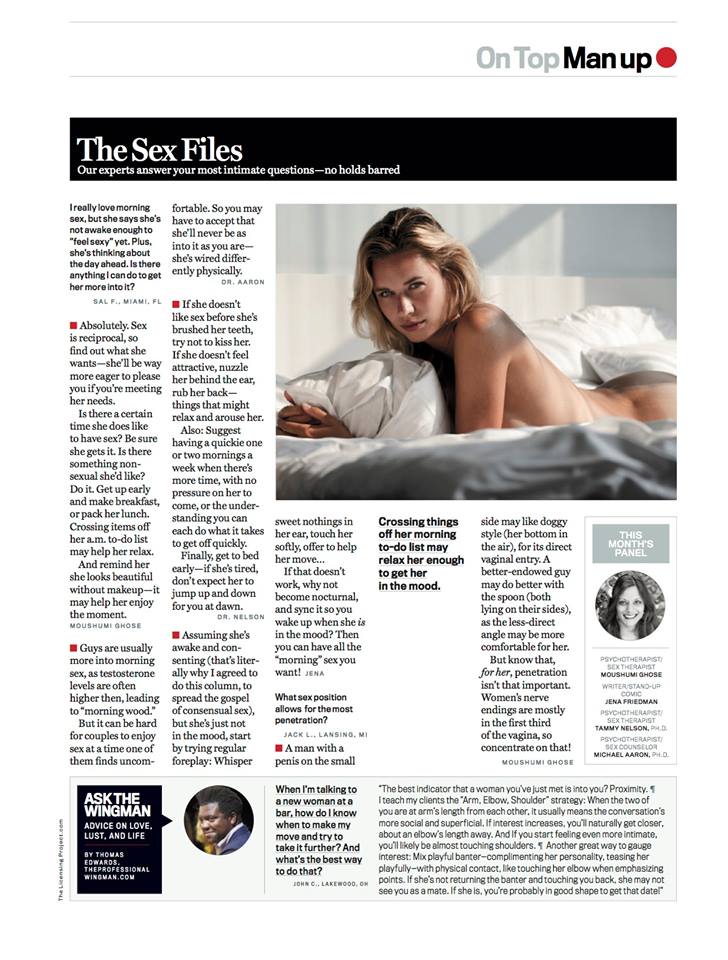
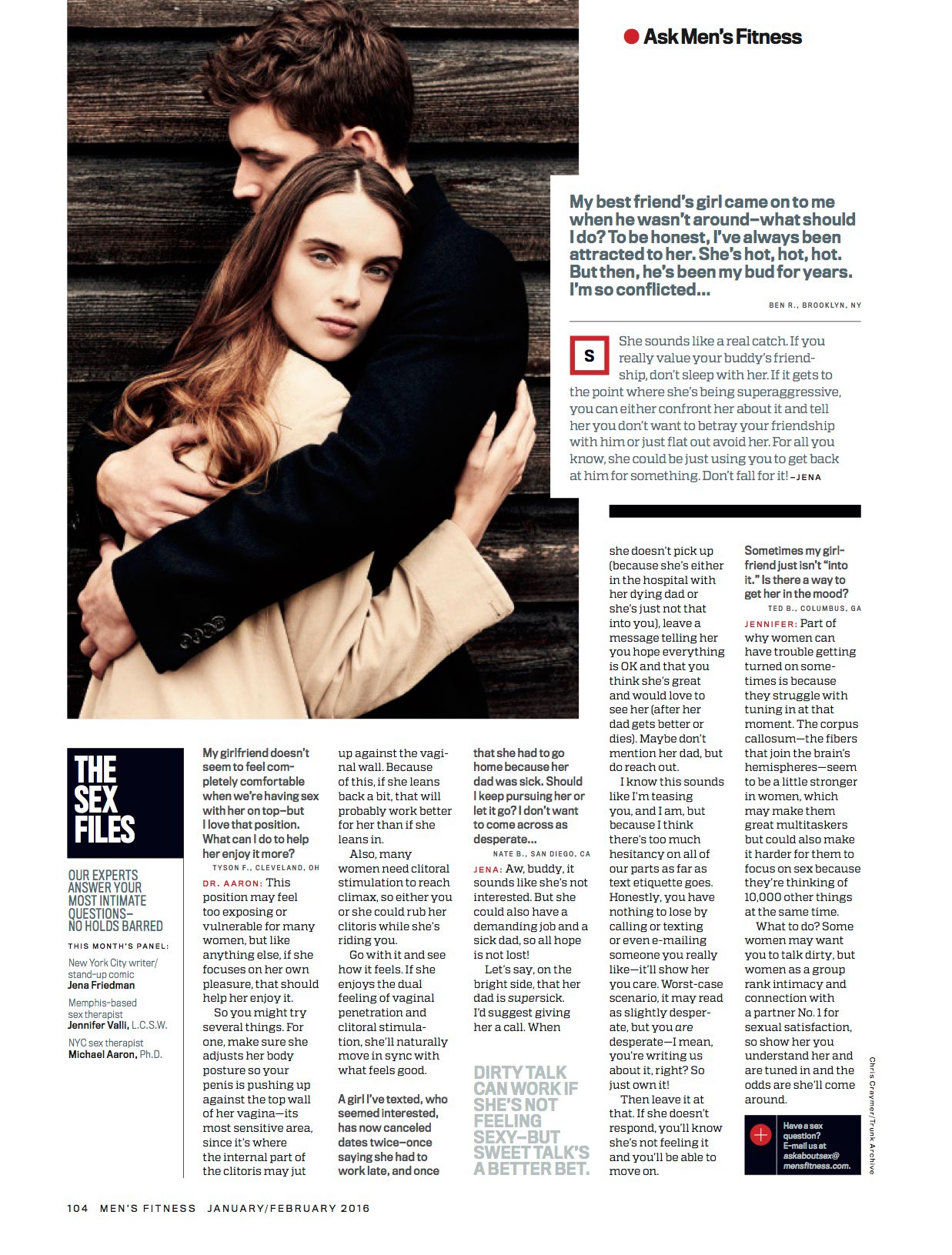
https://sexwithtimareepodcast.wordpress.com/2016/02/29/ep236-the-upcoming-alt-sex-nyc-conference-sex-with-timaree-altsexnyc-2/ Head out to the newsstands and grab a copy of the Jan 2016 issue of Men's Fitness Magazine to see the premier of the new monthly "Sex Files" column in which I answer readers' sex questions. In this month's issue I answer a question in which a guy is looking to help his girlfriend enjoy more pleasure when she is having sex on top. Check out the screenshot below to see my response:
 Love& is a new magazine about relationships and sex. They interviewed me about common things that women may want their guys to improve upon in the bedroom. One of the big ones is touch, as a lot of men are way too rough and don't know how to adjust their touch to what their partner wants. For more on this, and other pointers, check out the article itself below:
 Market analysts predict that new virtual reality technology will revolutionize the way we experience media, and will specifically boost the porn industry to unprecedented levels. This detailed article covers a lot of ground, addressing both the technology, business and social ramifications of virtual reality porn. I was asked to give my take on the issue and somehow a 20 minute phone conversation was distilled to a brief paragraph at the end of the piece, but nonetheless, it is still a worthwhile read.
 Does Bill Cosby have a fetish for unconscious women? Who knows? He's not a client and I've never met him, so I cannot say for sure, but this provocative piece in the NY Times tries to get to the bottom of his alleged bizarre behavior. The reporter did a great job dealing with some uncomfortable material, so be sure to click the link below to see what I had to say on this issue:
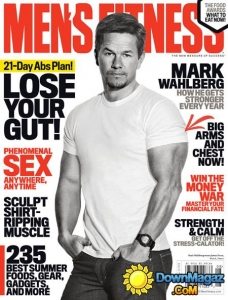 I was recently asked by a reporter from Men's Fitness magazine to discuss reasons why a heterosexual man might refrain from having sex with a willing woman. The questions were basically soft balls, seemingly aimed at a younger, more inexperienced, male audience, but hey, I managed to drop a few decent pointers, relating to finding out if the woman is in a relationship, and if so, what kind of relationship she is in before diving in. If you want to take a look and poke around more, you can go directly to the article below. You are going to have to click to page 3 to see my quotes, btw.
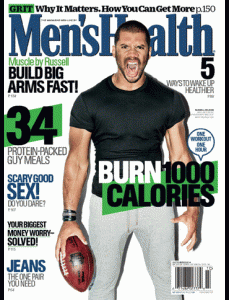 I was recently interviewed for a Men's Health article on sex toys designed for men. They wanted to know my take on these "robotic masturbators" (as they called them) and as always, I tried to take a fair and balanced view of things. I pointed out that they could be used as a way to get better acquainted with one's sexuality (as well as get some much needed relief), but an over-reliance on technology may also limit guys from developing the necessary skills that would help them form romantic relationships.
At any rate, hurry on over to the article here--
I was recently interviewed for a Men's Health article on sex toys designed for men. They wanted to know my take on these "robotic masturbators" (as they called them) and as always, I tried to take a fair and balanced view of things. I pointed out that they could be used as a way to get better acquainted with one's sexuality (as well as get some much needed relief), but an over-reliance on technology may also limit guys from developing the necessary skills that would help them form romantic relationships.
At any rate, hurry on over to the article here-- 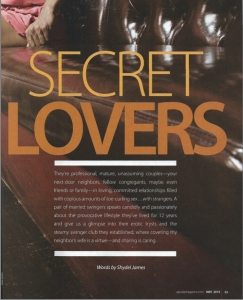 Go check out a great, and I mean GREAT, absolutely fascinating article in the May issue of Upscale Magazine, entitled "Secret Lovers," in which I am interviewed regarding the hush hush world of the swinger subculture. The writer does a really good job of trying to understand the psychology of folks who practice consensual non-monogamy and I think the piece is very even-handed, with some practical tips for couples who are curious about dipping their toes in the lifestyle. I'll leave you with a quote from one of the swingers profiled in the piece, which I think gives a good feel for the tone and depth of the article-- "I love to see her with two guys and two girls at once. I enjoy submissive women, and there is no sexier submission than to watch my wife please me by pleasing others." If that sounds interesting, then I suggest you head out and grab a copy. It's well worth the read.
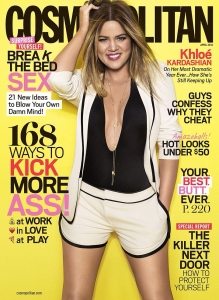 I am featured in the Sex Q&A section of Cosmo's April 2014 issue, in which I get asked about BJs, Plan B, sex in hot tubs, and all kinds of other tittilating reader questions. They did a good job of adding all kinds of humor, including a silly picture of tea bags-- need I say more? It's a can't- miss hoot. Go and check it out at news stands now!
 I just recently did an interview for a cool podcast called