
As I discussed in my previous post about an upcoming TV show, social justice is an important part of my mission and my work as a sex therapist. So what does social justice mean, and how exactly do I apply it in my sex therapy practice? First, let’s take a look at a definition of what social justice is. I found a good quote from Matthew Robinson, a Poli Sci professor, that pretty much sums up my own views on this issue:
Social justice is defined as “… promoting a just society by challenging injustice and valuing diversity.” It exists when “all people share a common humanity and therefore have a right to equitable treatment, support for their human rights, and a fair allocation of community resources.” In conditions of social justice, people are “not be discriminated against, nor their welfare and well-being constrained or prejudiced on the basis of gender, sexuality, religion, political affiliations, age, race, belief, disability, location, social class, socioeconomic circumstances, or other characteristic of background or group membership”
The key elements of this that resonate for me in my practice are: a) challenging injustice, b) valuing diversity, c) welfare nor well-being constrained or prejudiced based on gender, sexuality, etc…. As a practicing psychotherapist, I am sometimes concerned that social justice is not always appropriately observed in consulting rooms and I often speak out about this in my writings and lectures. Often, social injustice is perpetrated unwittingly through unnecessary pathologizing of non-normative, yet non-pathological manners of sexual expression and behaviors. I believe the good folks who do this mean well, they just don’t have enough training, education, and lived experience in these areas to know any better. Examples of this kind of social injustice include any kind of attempt to cure homosexuality, transgenderism, or kinky fetishes for instance. I’m not saying that a clinician should push these things onto a confused client either. Just that they need to honor the person’s individual process and allow them to make their own decisions without the harmful usage of assumed pathology on the part of the clinician. Thankfully such quack treatments such as conversion therapy have been largely discredited. In fact, reparative (or conversion) therapy is illegal in New Jersey.
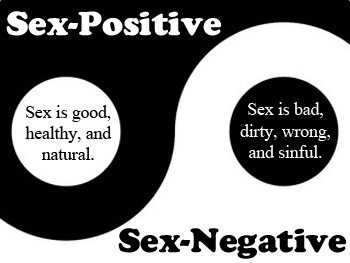
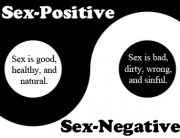
However, there are two other key areas that I think cause a lot of problems for clinicians and as a result, break forth unwitting examples of social injustice. These two areas are sex addiction and women’s sexual freedom. Let’s start with sex addiction first. One of the first things to know about sex addiction is that it is a controversial and highly charged topic in sexological circles, and indeed, was rejected for inclusion in last year’s DSM 5. I don’t think that anyone really believes that sexually compulsive behavior doesn’t exist. We’ve all heard or know of shopaholics, workaholics, gambling addicts, so why not sexaholics? Makes sense. I work with a number of sexually compulsive folks, so I know it is a harsh reality in some peoples’ lives. The problem is that many sex addiction professionals approach their work from a sex-negative stance. For more on this click on this article about the difference between sex positivity and sex negativity.
I don’t see anyone treating shopaholics from the standpoint that shopping is bad or that workaholics are being told that they should stop working. But there’s a very strong conservative bent in the sex addiction field that views any sex outside of a loving, committed relationship as bad, or that any sex, even in a loving relationship, should be about sweet pillow talk, eye gazing and other forms of romance novel “intimacy”. So, unfortunately anyone who deviates from that template is deemed to be pathological. I would never refer clients to clinicians who work from this perspective. Bringing in the social justice component, telling someone who has a high sex drive that they are a sex addict is a form of social injustice, calling someone who desires sexual variety a sex addict is social injustice, and telling someone who has a non-normative sexual appetite that he/she is a sex addict, just because other people don’t like it, is yes, also social injustice. In this way, social injustice is perpetrated in numerous mental health offices throughout the country every day. Now, I’m not talking about liars, cheaters, acts of infidelity, or any other such nonconsensual behavior. I’m talking about the social injustice of pathologizing human sexuality.
Another issue that is top of mind for me is women’s sexuality. I’m talking about the double standard in our society between men and women when it comes to sex. Women who have lot of sex and like it, they are called sluts. Slut shaming. (Men get shamed too, but it’s usually in the context of a committed relationship– see sex addiction above). I see this issue of slut shaming come up a lot in my work with sex workers. Most sex workers are women, and because there is no way in hell that women like sex, it must be assumed that these women are somehow oppressed or coerced to do what they do. Sure, there are unfortunate folks who fall into some kind of human trafficking scheme and I don’t want to minimize that. Although I have to say I have never run into such a person and I have worked with numerous sex workers, so I’m not really sure how accurate the alarmist headlines really are. Note: I’m not talking about street prostitution here, in which the women are often engaged in survival behavior, and are often addled with various addictions, but rather indoor sex work, which accounts for a majority of it and is legal in most 1st world countries, including Canada.
In my experience, sex workers do sex work because they LOVE sex. Yes, they enjoy what they do. And they are most concerned about law enforcement than about sexual exploitation. I think it’s a mistake that people make to assume that strong, confident feminist women view sex in some sort of negative light. They often confuse feminism with the Andrea Dworkins and Catharine MacKinnons of the world. However, there is a large contingent of pro-sex feminists who advocate female empowerment through sexuality, and the clash between these two rival factions is now known as the “Feminist Sex Wars.” Sex-positive feminism is a big movement with numerous conferences, both nationally and internationally, in which they will discuss such key issues as the decriminalization of prostitution and feminist pornography. Yes, feminist pornography. I’ll say it– those who think that all, or even most women, have a problem with pornography or prostitution in which all parties participate consensually and through self-agency, live in a sheltered cave.
A recent study in the prestigious Journal of Sex Research found that many women in the pornography industry actually have higher self-esteem, a better quality of life, and are more spiritual than their non-porn cohorts. The researchers concluded that the “damaged goods” theory about sex workers was BS. Don’t just believe me, read the journal article here.
Recently, the Australian government ran a research project, interviewing about 200 indoor prostitutes. This is what they found according to Ronald Weitzer, a George Washington U professor:
A study by the Australian government reported that half of the 82 call girls and 101 brothel workers interviewed felt their work “was a major source of satisfaction” in their lives; two-thirds of the brothel workers and seven out of ten call girls said they would “definitely choose this work” if they had to do over again; and 86 percent in the brothels and 79 percent of call girls said that “my daily life is always varied and interesting.”
I could go on and on, but anyway, I think this article has gone too long and has run it’s course. The point is that anyone who assumes that any woman engaging in sex work is somehow damaged is practicing social injustice. Taking away a woman’s kids because she does sex work is social injustice. For that matter, I’ll go the next step and say that in my opinion, based on longitudinal outcomes, the criminalization of most sex work is in itself a social injustice.
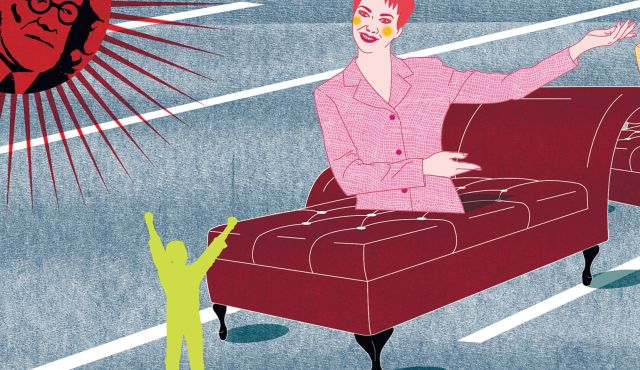
One last point… no discussion of social justice and psychotherapy can be complete without at least a mention of fees. The availability of mental health services to marginalized and disenfranchised populations is a major issue in what is mostly a broken mental health system here in the US. Even Freud, back in the day, set up free clinics in Austria to help poor people, outside of his practice with wealthy, bored, and sexually frustrated Viennese women. While, as a highly trained specialist with an office in midtown Manhattan, my rates are competitive with my peers, I make a point of making at least a few spots available in my schedule at highly reduced fees for the most marginalized sexual minorities, such as teens or young adults who have been outcast from their homes due to their sexuality and young trans folks who are in various phases of their transition. I think it’s the socially just thing to do.







































 Prevention: Is Sex Addiction Real?
 Romper: Emotional Infidelity
 Fatherly: BDSM More Common Than You Think
 E! Online: Marrying a Murderer
 Who Magazine: What is Bisexuality?
 CNN: Why Men May Exaggerate Their Sex Numbers
 Women’s Health: 10 Kinky Sex Ideas
 NY Post: How Tattoos Can Sabotage Your Love Life
 Allure: 8 BDSM Sex Tips to Try If You’re a Total Beginner
 Great article in Prevention Magazine about the sex addiction controversy. Check out what I had to say.
 Romper approached me again for another quote, this time about emotional infidelity.
 Interesting piece in Fatherly about BDSM in which I was interviewed.
https://www.fatherly.com/love-money/bdsm-kinky-sex-not-uncommon/
Interesting piece in Fatherly about BDSM in which I was interviewed.
https://www.fatherly.com/love-money/bdsm-kinky-sex-not-uncommon/ E! News picked up my an interview I did with Vice a few years ago about hybristophilia, which is the attraction to criminals. Very interesting story.
 Who is Australia's version of People Magazine. They wanted to know what bisexuality is and I provided some insight.
 Seems like something doesn't add up on sex surveys-- are men exaggerating their number of partners? Check out what I tell CNN.
 Women's Health asked me for some kinky ideas to spice up one's sex life.
 I was interviewed by the NY Post about all the ways in which I've seen bad tattoos sabotage relationships.
 Allure Magazine asked me about tips for BDSM beginners.
 I answer questions from Salon.com about the infamous porn site PornHub.
 I tell Cosmo about the personality traits of monogamous individuals.
 I explain to Refinery29 why it's so important to not fake orgasms in a relationship.
 I am interviewed in this fairly nuanced piece on the pros and cons of porn.
 I am interviewed by Headspace, one of the best meditation and mindfulness apps available, on how to become more present.
https://www.headspace.com/blog/2017/05/26/enjoy-sex-more/
I am interviewed by Headspace, one of the best meditation and mindfulness apps available, on how to become more present.
https://www.headspace.com/blog/2017/05/26/enjoy-sex-more/ I am interviewed in this intriguing Business Insider article on how often happy couples have sex.
 The Huffington Post in South Africa profiles my work around challenging sex addiction (including my red/yellow/green menu exercise) .
 I go deep into the sex toy business with Vice.
 I give some insight into this interesting topic.
https://thetab.com/us/2017/03/22/happens-boyfriend-leaves-another-man-63306
I give some insight into this interesting topic.
https://thetab.com/us/2017/03/22/happens-boyfriend-leaves-another-man-63306 I am featured in this outstanding article in UK's Independent on women and virtual reality porn. I thought this was a fairly sharp and nuanced piece.
 I give Redbook some pointers on having a 3some for the first time.

 Playboy sent a journalist to watch Fifty Shades Darker, and then compared the movie with the results from my recent groundbreaking research on BDSM. Great article, enjoy!
 I am featured in this terrific New York Magazine article, discussing some of the finer points brought up in the earlier article in SELF magazine (see listing below).
 I am featured in this terrific article in SELF magazine on the nuances of the sex addiction debate.
 Complex asked me to weigh in on this provocative topic.
 I weigh in in this great advice column in Thrillist by Elle Stanger.
 Great episode, check it out.
https://soundcloud.com/futureofsex/04-exploring-sexual-fluidity-bicuriousity-for-women-featuring-skirt-club-and-dr-michael-aaron
Great episode, check it out.
https://soundcloud.com/futureofsex/04-exploring-sexual-fluidity-bicuriousity-for-women-featuring-skirt-club-and-dr-michael-aaron I give couples advice on how to deal with differences in preferred sleeping arrangements.
 Alternet does a great job of reviewing my book. Check out the link below.
 In this episode, we talk about the societal myths of sexuality, including:
 I was asked to appear on Australian radio. It was a very fun segment, will post the link when I have it!
 I appear on the Stereo-Typed podcast to discuss my new book, fantasies, and our shadow self. Click the audio player below and enjoy!
https://www.spreaker.com/user/crazyheart/stereo-typed-8-dancing-with-your-shadow
I appear on the Stereo-Typed podcast to discuss my new book, fantasies, and our shadow self. Click the audio player below and enjoy!
https://www.spreaker.com/user/crazyheart/stereo-typed-8-dancing-with-your-shadow I appear on the Boom Doctors Podcast to discuss my new book Modern Sexuality and my work as a sex therapist. Clink the link below to listen in.
http://theboomdoctors.com/2016/09/21/ep-132-michael-aaron-on-his-work-as-a-sex-therapist-his-new-book-modern-sexuality/
I appear on the Boom Doctors Podcast to discuss my new book Modern Sexuality and my work as a sex therapist. Clink the link below to listen in.
http://theboomdoctors.com/2016/09/21/ep-132-michael-aaron-on-his-work-as-a-sex-therapist-his-new-book-modern-sexuality/ I was asked by Nylon Magazine to weigh in on the subject of porn and what it means about the individual consumer. Pretty good non-pathologizing piece, check it out here:
 I was interviewed by Vocativ about a new virtual reality series entitled "Virtual Sexology," designed to provide breathing and relaxation exercises in a virtual reality format to help individuals improve sexual functioning. Will something like this prove effective? The jury is out, but check out what I had to say...
 I appeared on the nationally broadcasted Fusion Network Hotline show to discuss the GOP platform of porn as a "public health crisis." As part of the discussion I debate Dr. Neil Malamuth on porn and sexual violence. I thought this was a very thorough and productive half hour, which you can watch below:
 In this Huffington Post article, I advise couples to use sex menus to spice things up. Check out all the details in the link below.

 I appeared on French national tv channel Canal + on the Emission Antoine tv show, discussing the psychology behind financial domination. I will post a video clip of the interview shortly.
 I was interviewed on Huffington Post's Love + Sex Podcast, which I'm told is the most downloaded sex and relationship podcast on iTunes. In this episode, I dispel the wild myths about "sex roulette" parties.
 I was interviewed for an upcoming online sexuality discussion series, the Sexual Reawakening Summit. It features many top sex therapists from around the country and you can access it by using this link:
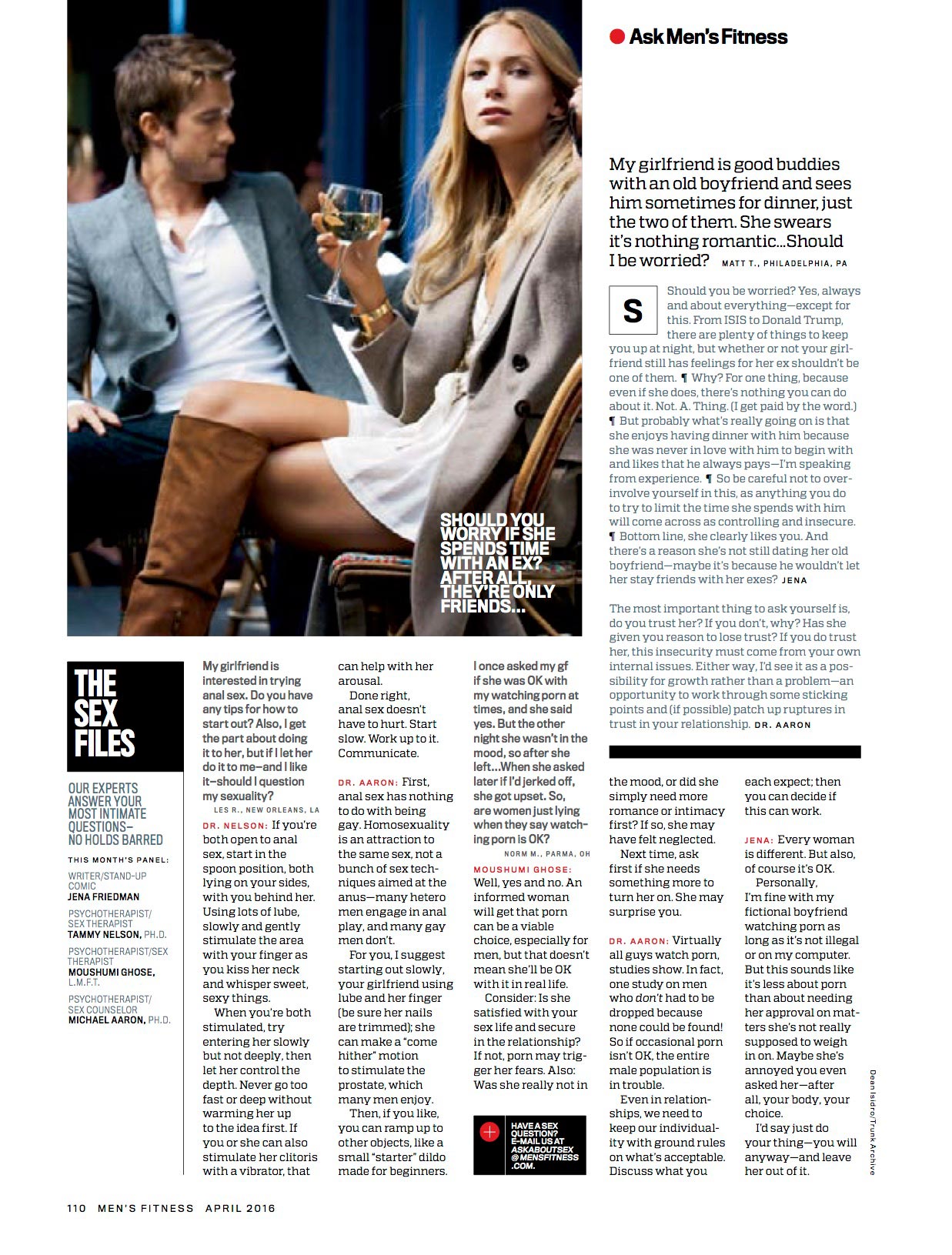
 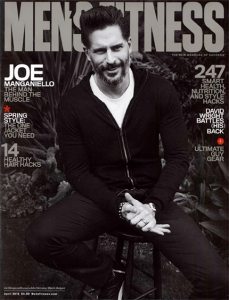 In the April edition of my Men's Fitness 'Sex Files' Q&A column, I answer questions about anal sex and porn. Hurry and pick up a copy before it's off the stands!
 I was asked by Women's Health Magazine to provide some advise on how to incorporate some new positions to spice up one's sex life. With a bunch of pictures and diagrams, I'm sure you'll find something that will intrigue you.
 Looks like Yahoo News picked up the Reuters article on women's fears that their partners expect sexual perfectionism. Check it out.
 My latest interview with Reuters, this time about social pressure on women to be perfect sexually. "Our society is filled with sexual myths and misconceptions, mostly stemming from a combination of our culture's puritanical roots, as well as rampant consumerism, which feeds off individual insecurities to sell unnecessary products," Aaron said.
 Want to know more about what the AltSex NYC Conference is all about? I appear with my co-organizer, Dulcinea Pitagora, on the Sex with Timaree show, a popular podcast, to discuss numerous things including how the conference was created and what attendees can expect. Click on the link below to check it out:
https://sexwithtimareepodcast.wordpress.com/2016/02/29/ep236-the-upcoming-alt-sex-nyc-conference-sex-with-timaree-altsexnyc-2/
Want to know more about what the AltSex NYC Conference is all about? I appear with my co-organizer, Dulcinea Pitagora, on the Sex with Timaree show, a popular podcast, to discuss numerous things including how the conference was created and what attendees can expect. Click on the link below to check it out:
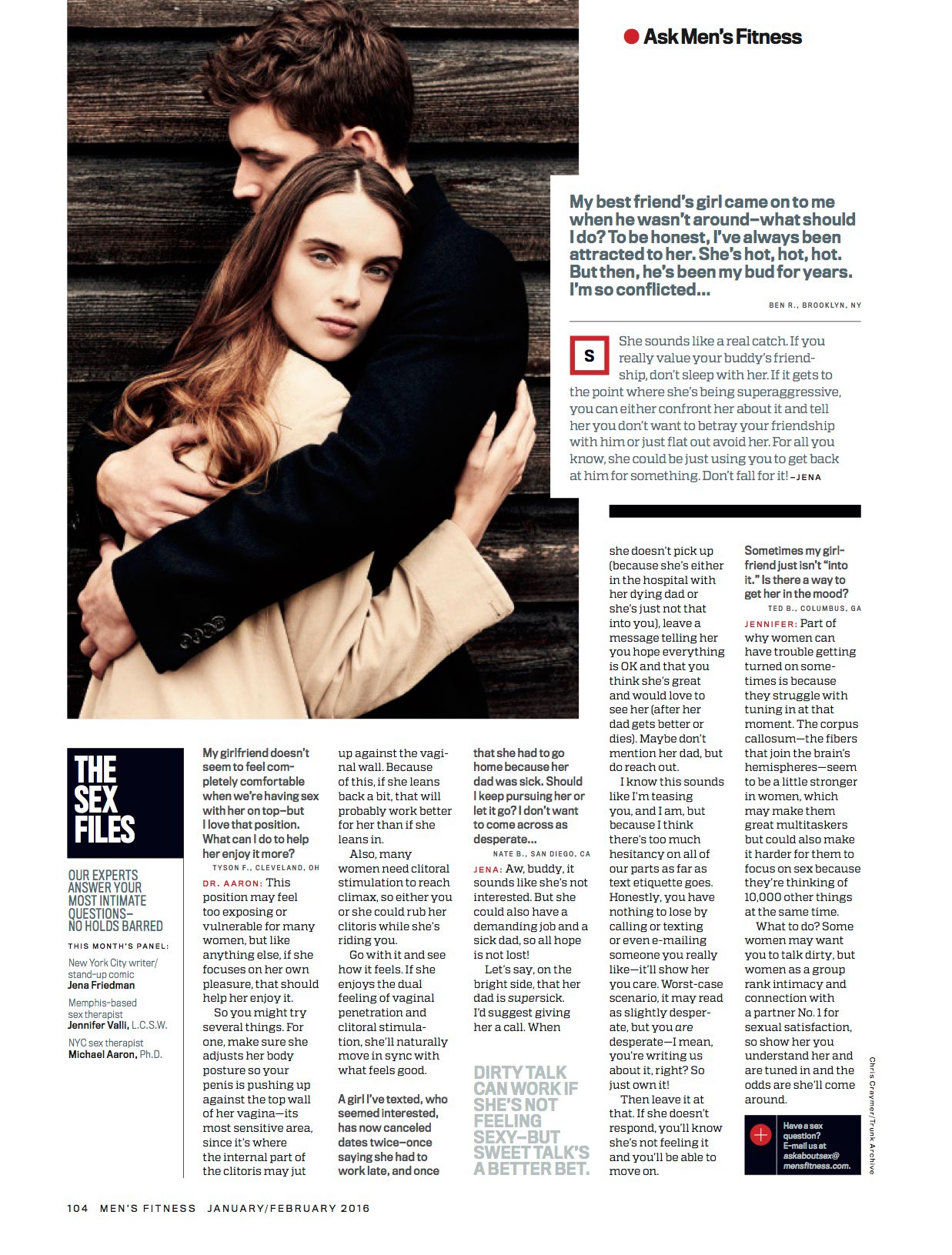
https://sexwithtimareepodcast.wordpress.com/2016/02/29/ep236-the-upcoming-alt-sex-nyc-conference-sex-with-timaree-altsexnyc-2/ Head out to the newsstands and grab a copy of the Jan 2016 issue of Men's Fitness Magazine to see the premier of the new monthly "Sex Files" column in which I answer readers' sex questions. In this month's issue I answer a question in which a guy is looking to help his girlfriend enjoy more pleasure when she is having sex on top. Check out the screenshot below to see my response:
 Love& is a new magazine about relationships and sex. They interviewed me about common things that women may want their guys to improve upon in the bedroom. One of the big ones is touch, as a lot of men are way too rough and don't know how to adjust their touch to what their partner wants. For more on this, and other pointers, check out the article itself below:
 Market analysts predict that new virtual reality technology will revolutionize the way we experience media, and will specifically boost the porn industry to unprecedented levels. This detailed article covers a lot of ground, addressing both the technology, business and social ramifications of virtual reality porn. I was asked to give my take on the issue and somehow a 20 minute phone conversation was distilled to a brief paragraph at the end of the piece, but nonetheless, it is still a worthwhile read.
 Does Bill Cosby have a fetish for unconscious women? Who knows? He's not a client and I've never met him, so I cannot say for sure, but this provocative piece in the NY Times tries to get to the bottom of his alleged bizarre behavior. The reporter did a great job dealing with some uncomfortable material, so be sure to click the link below to see what I had to say on this issue:
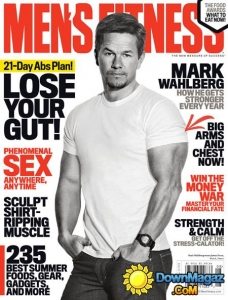 I was recently asked by a reporter from Men's Fitness magazine to discuss reasons why a heterosexual man might refrain from having sex with a willing woman. The questions were basically soft balls, seemingly aimed at a younger, more inexperienced, male audience, but hey, I managed to drop a few decent pointers, relating to finding out if the woman is in a relationship, and if so, what kind of relationship she is in before diving in. If you want to take a look and poke around more, you can go directly to the article below. You are going to have to click to page 3 to see my quotes, btw.
 I was recently interviewed for a Men's Health article on sex toys designed for men. They wanted to know my take on these "robotic masturbators" (as they called them) and as always, I tried to take a fair and balanced view of things. I pointed out that they could be used as a way to get better acquainted with one's sexuality (as well as get some much needed relief), but an over-reliance on technology may also limit guys from developing the necessary skills that would help them form romantic relationships.
At any rate, hurry on over to the article here--
I was recently interviewed for a Men's Health article on sex toys designed for men. They wanted to know my take on these "robotic masturbators" (as they called them) and as always, I tried to take a fair and balanced view of things. I pointed out that they could be used as a way to get better acquainted with one's sexuality (as well as get some much needed relief), but an over-reliance on technology may also limit guys from developing the necessary skills that would help them form romantic relationships.
At any rate, hurry on over to the article here--  Go check out a great, and I mean GREAT, absolutely fascinating article in the May issue of Upscale Magazine, entitled "Secret Lovers," in which I am interviewed regarding the hush hush world of the swinger subculture. The writer does a really good job of trying to understand the psychology of folks who practice consensual non-monogamy and I think the piece is very even-handed, with some practical tips for couples who are curious about dipping their toes in the lifestyle. I'll leave you with a quote from one of the swingers profiled in the piece, which I think gives a good feel for the tone and depth of the article-- "I love to see her with two guys and two girls at once. I enjoy submissive women, and there is no sexier submission than to watch my wife please me by pleasing others." If that sounds interesting, then I suggest you head out and grab a copy. It's well worth the read.
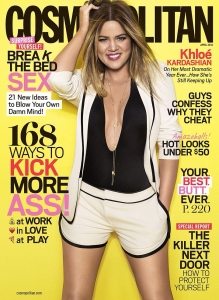 I am featured in the Sex Q&A section of Cosmo's April 2014 issue, in which I get asked about BJs, Plan B, sex in hot tubs, and all kinds of other tittilating reader questions. They did a good job of adding all kinds of humor, including a silly picture of tea bags-- need I say more? It's a can't- miss hoot. Go and check it out at news stands now!
 I just recently did an interview for a cool podcast called